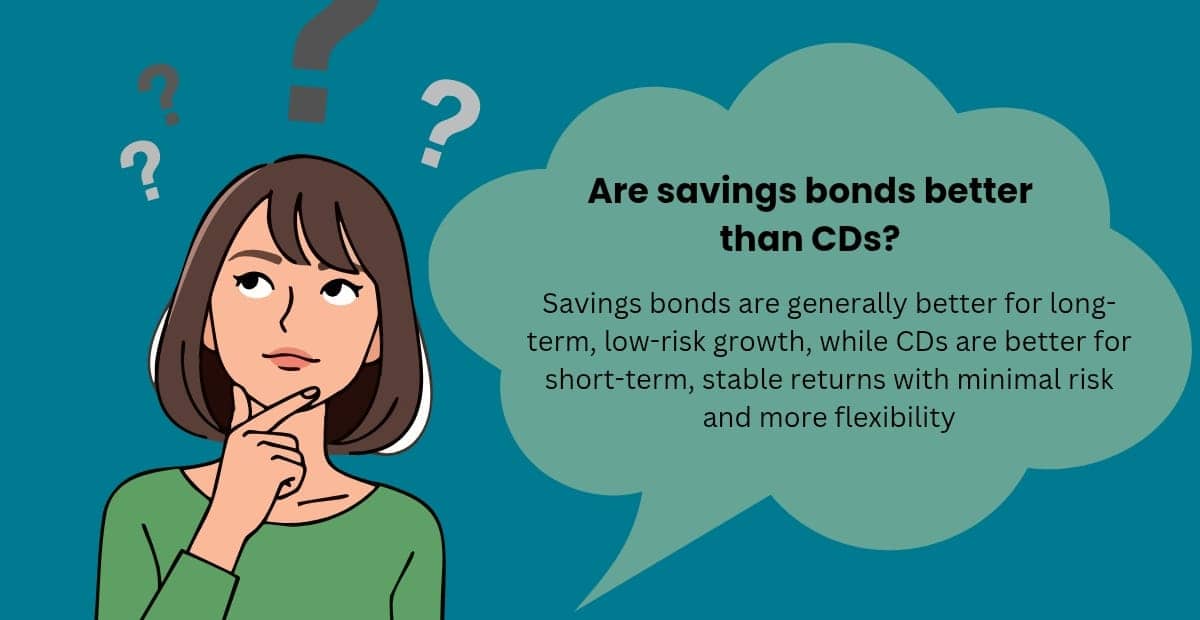
Understanding the Basics: What are Savings Bonds and Certificates of Deposit (CDs)?
Savings Bonds Definition
Are Savings bonds better than CDs is unique financial instrument issued by the government that offer a secure way to save money while accruing interest over time. Unlike traditional bonds that are traded on the stock market, savings bonds are non-negotiable, meaning they can’t be bought or sold once purchased.
This feature makes them particularly appealing for those looking for a stable and risk-free investment, especially when compared to other fixed-income options like Certificates of Deposit (CDs).
What is a CD
Certificates of Deposit (CDs) offer a unique blend of security and stability, making them an appealing option for conservative investors. Unlike stocks or mutual funds, CDs represent a fixed investment, meaning your principal remains untouched for the duration of the term, which typically ranges from a few months to several years.
This guaranteed return can often rival that of bonds, especially in fluctuating interest rate environments. For individuals looking to preserve capital while earning some interest, CDs act as a reliable choice compared to the more volatile bond market.
How Savings Bonds Work
Savings bonds are a unique and accessible way to invest, appealing to both novice and seasoned investors alike. They are debt securities issued by the U.S. Department of the Treasury, typically offering a fixed interest rate over a specified period.
Unlike Certificates of Deposit (CDs), which typically require a lump sum investment for a set term, savings bonds are often purchased at half their face value, allowing for a low entry price. This feature can attract those who may not have significant capital to invest upfront.
How CDs Work
Certificates of Deposit (CDs) offer a unique blend of security and interest rates that can rival traditional savings accounts. When you invest in a CD, you’re essentially lending money to a bank for a fixed term, from a few months to several years.
In return, the bank pays you interest at a predetermined rate, often higher than standard savings accounts. This appeal lies in the predictability of returns; you’ll know upfront what your earnings will be when the term expires, making it a stable choice for conservative investors.
Fixed Income Investments
Fixed income investments, such as bonds and certificates of deposit (CDs), offer a unique blend of security and predictable returns in an increasingly volatile market. Bonds, for instance, serve not only as a safety net but also as a strategic tool for portfolio diversification.
Investors seeking steady income can benefit from the regular interest payments provided by these debt securities, while also enjoying the potential appreciation of bond values in a declining interest rate environment.
Comparing Risk and Safety: Which Investment Offers More Security?
Savings Bond Safety
When considering investment opportunities, safety is paramount. Savings bonds, backed by the U.S. government, offer a layer of security that many investors find appealing. Unlike other investment vehicles, such as stocks or corporate bonds, savings bonds carry minimal risk, ensuring your capital remains safe over time. This is especially beneficial for conservative investors who prefer stability over volatility.
CD Risk Level
When evaluating the CD risk level, it’s essential to consider not only the interest rates but also the overall economic climate. Unlike bonds, which can fluctuate in value based on market conditions, CDs (Certificates of Deposit) offer a guaranteed return if held to maturity.
This stability makes them an appealing option for conservative investors seeking to protect their capital, especially in uncertain times. However, the trade-off for this safety is often lower yields compared to riskier assets.
FDIC Insurance
FDIC insurance is a vital safety net for bank depositors, guaranteeing that funds up to $250,000 are protected against bank failures. While many people associate this coverage with traditional savings and checking accounts, it also extends to other financial instruments, including Certificates of Deposit (CDs). Unlike bonds, which expose investors to market fluctuations, CDs offer a fixed interest rate and a maturity date, making them an attractive, low-risk option for those looking to grow their savings without fear of losing their principal.
Government-Backed Investments
Government-backed investments, such as bonds and certificates of deposit (CDs), offer a unique blend of safety and stability that appeals to conservative investors. Bonds, particularly those issued by the U.S. Treasury, are often seen as a bedrock of risk-averse portfolios due to their backing by the full faith and credit of the government.
This assurance translates into lower yields compared to corporate bonds, yet it also provides a buffer against market volatility, making them a crucial component for wealth preservation strategies.
Low-Risk Savings Options
For those seeking a safe harbor for their funds, low-risk savings options like bonds and Certificates of Deposit (CDs) offer a reassuring blend of stability and modest returns. Bonds, often seen as a cornerstone of conservative investing, allow individuals to lend money to corporations or governments in exchange for interest payments over time. This not only diversifies your portfolio but also provides a predictable income stream, making it a smart choice for risk-averse savers looking to safeguard their capital.
Payouts and Returns: Interest Rates on Savings Bonds vs. CDs
Savings Bond Interest Rates
When considering investment options, many investors often weigh savings bonds against certificates of deposit (CDs). While both are relatively low-risk choices, the interest rates for savings bonds can provide a compelling argument for their inclusion in a diversified portfolio.
Unlike CDs, which offer fixed interest rates for a predetermined period, savings bonds can have variable rates that change based on inflation. This feature can protect your investment’s purchasing power over time, making savings bonds particularly appealing in a fluctuating economy.
CD Interest Rates Comparison
When comparing CD interest rates, it’s vital to understand how these fixed-income investments stack up against bonds in today’s fluctuating market. While both CDs and bonds can provide a steady stream of income, the security of a Certificate of Deposit (CD) often makes it a more appealing option for conservative investors.
With rising interest rates, many financial institutions are unveiling promotional rates that surpass those of traditional bond offerings, providing a safe haven for those looking to maximize their returns without venturing into more volatile securities.
Compound Interest Accounts
Compound interest accounts are a powerful financial tool that can significantly enhance the growth of your savings over time. Unlike traditional savings accounts, where interest is paid only on the principal, compound interest allows you to earn interest on both your initial investment and the accumulated interest from previous periods.
This means your money works harder for you, transforming modest investments into substantial wealth — especially when you consider the long-term benefits.
Yield on CDs vs Bonds
When considering investment options, the yield on CDs (Certificates of Deposit) and bonds often captures attention, yet their appeal varies significantly depending on individual goals and market conditions. CDs typically offer fixed interest rates with FDIC insurance, providing a safe, predictable return.
On the other hand, bonds come with varying yield profiles, influenced by factors like credit ratings, maturity duration, and prevailing interest rates. This fluctuation presents investors with potential for higher yields, albeit with increased risk exposure.
People also ask
Liquidity and Access to Funds: Which Offers Greater Flexibility?
Early Withdrawal Penalties CD
Navigating the world of Certificates of Deposit (CDs) often leads to the question of early withdrawal penalties. While these penalties can deter you from accessing your funds prematurely, they also serve as a safety net for banks, ensuring they can offer higher interest rates compared to traditional savings accounts.
When contemplating investing in CDs, it’s crucial to weigh the potential drawbacks against the benefits of guaranteed returns — especially in a fluctuating market where bonds may not offer as competitive yields.
Cashing in Savings Bonds Early
Cashing in savings bonds early can seem like an attractive option when you need immediate cash flow, but it’s essential to weigh the pros and cons carefully. Unlike CDs, which pay a fixed interest rate over a predetermined term, savings bonds accrue interest that compounds over time.
If you redeem them before the maturity period — typically 20 years for most bonds — you may forfeit some of that interest, which can diminish the overall return on your investment.
Liquidity of Savings Bonds vs CDs
When comparing the liquidity of savings bonds and CDs (certificates of deposit), it’s crucial to delve into the nuances of each investment. Savings bonds, particularly Series I bonds, can be redeemed after just one year, offering a degree of flexibility.
However, cashing out before the five-year mark results in a loss of interest, which can deter those needing immediate access to funds. This feature can be a double-edged sword; while it provides some liquidity, investors must carefully consider their long-term financial goals to avoid penalties that erode potential earnings.
Tax Considerations: How Do Savings Bonds and CDs Affect Your Tax Bill?
Savings Bond Tax Benefits
When considering investment options, savings bonds offer unique tax benefits that can be highly advantageous. While traditional CDs (Certificates of Deposit) generate taxable interest income annually, the interest on savings bonds is only taxed when the bond is redeemed.
This deferral can be particularly beneficial for individuals looking to minimize their tax burden in the early years of their investment, allowing savings to grow unencumbered.
Taxable Interest From CDs
Taxable interest from certificates of deposit (CDs) can often catch investors off guard, especially when tax season rolls around. Unlike some bonds, which may offer tax-exempt options, the interest accrued from CDs is fully taxable at your ordinary income tax rate. This means that while CDs can provide stability and a predictable yield, their tax implications can significantly affect your net earnings.
Tax Advantages Investment Options
When considering tax advantages in investment options, bonds and CDs (Certificates of Deposit) stand out for their unique benefits. Municipal bonds, for instance, offer tax-exempt interest income, making them particularly appealing to high-income investors looking to reduce their tax burden. This feature not only elevates the effective yield but also aligns with a strategy to preserve wealth over time.
Investment Goals: When Should You Choose a Savings Bond or a CD?
Best Investment For Short Term Goals
When it comes to short-term investment goals, the allure of bonds and certificates of deposit (CDs) can’t be overlooked. While both options provide stability and lower risk, they cater to different financial needs.
Bonds, particularly those with shorter maturities, can yield solid returns while allowing more flexibility than traditional saving instruments. They often benefit from interest rate movements, potentially enhancing your return if you choose the right time to invest.
Long-Term Safe Investments
Investing for the long term often brings to mind the stability of bonds and certificates of deposit (CDs). While they may seem conservative, especially in a world chasing high returns, these instruments hold intrinsic value that savvy investors can harness.
Bonds, especially those from reliable issuers, offer a predictable income stream through interest payments, creating a sense of security that stocks often can’t match. Even in volatile markets, a diversified bond portfolio can serve as a financial bulwark, helping to mitigate risk while preserving capital.
College Savings Options With Bonds or CDs
When strategizing for college savings, bonds and certificates of deposit (CDs) emerge as compelling options. U.S. savings bonds, particularly Series I bonds, provide a unique advantage with their inflation-adjusted interest rates, making them not just a secure investment but also a hedge against rising costs of education.
These bonds encourage a long-term perspective, maturing in 20 years while offering tax-free growth when utilized for qualified education expenses. As tuition rates surge, the protective aspect of bonds can give parents peace of mind, knowing they are preserving the purchasing power of their savings.
The Bottom Line: Are Savings Bonds Better Than CDs for Your Financial Future?
Savings Strategy Comparison Summary
When evaluating savings strategies, bonds and certificates of deposit (CDs) often emerge as popular options, each with unique benefits. Bonds, particularly government and municipal varieties, tend to offer a fixed interest rate over a longer duration, providing a reliable income stream.
However, they can be subject to interest rate risk, especially if market conditions fluctuate. On the other hand, CDs are typically low-risk, providing guaranteed returns over a set term, but they often require locking in your funds until maturity, limiting liquidity.
Choosing Between Savings Bond and CD Investment
When considering the best investment choice between savings bonds and CDs, understanding their unique characteristics is essential. Savings bonds, issued by the government, typically offer a fixed interest rate and are backed by the full faith of the U.S. Treasury.
They are a low-risk option, particularly appealing for those looking for a long-term, secure investment that can be gradually redeemed. On the flip side, certificates of deposit (CDs) often provide higher interest rates, especially for longer terms, but require your funds to be locked in for a set period, which can range from a few months to several years.
Conclusion: Make an Informed Choice—Secure Your Money with the Right Investment Vehicle Today!
In conclusion, taking the time to research and understand the various investment vehicles available to you is essential for securing your financial future. Each option, from stocks and bonds to real estate and mutual funds, offers unique advantages and risks that cater to different investment goals.
By assessing your financial situation, risk tolerance, and long-term objectives, you can select the right path that aligns with your needs. Remember, informed decision-making is the key to maximizing your investment potential. Start your journey towards financial security today — explore your options and take that first step toward a brighter financial future!




2 thoughts on “Are Savings Bonds Better Than CDs? A Convincing Comparison for Savvy Investors”