Understanding U.S. Savings Bonds: EE vs. I Bonds
Savings Bonds Types
When it comes to savings bonds, two primary types stand out — Series I and Series EE bonds. Series I bonds are uniquely designed to protect your investment from inflation, thanks to their built-in variable interest rates linked to the Consumer Price Index.
This means that while you’re watching your money grow, it’s also keeping pace with rising costs, making it a savvy choice for those who worry about the eroding effects of inflation on traditional savings.
EE Bond Value
The value of EE bonds can often feel like a puzzle, but understanding their growth can reveal hidden opportunities for savvy savers. These U.S. government bonds are designed to earn interest for 30 years, but the magic doesn’t just lie in their long-term horizon.
Unlike many investments, EE bonds are guaranteed to double in value if held for 20 years, making them a compelling option for those looking to secure a future asset without the market’s volatility.
I Bond Returns
I Bonds are gaining considerable attention, especially in times of economic uncertainty. With their unique interest structure, which combines a fixed rate and an inflation rate, I Bonds offer a solid safeguard against rising prices. Holding these bonds means not just earning interest, but also outpacing inflation, making them a smart choice for conservative investors looking to preserve their purchasing power.
Differences Between Savings Bonds
When it comes to savings bonds, the differences can significantly influence your investment strategy. For instance, traditional Series EE bonds are a popular choice for those looking for a stable, long-term savings option, as they guarantee to double in value if held for 20 years.
However, the Series I bonds bring an exciting twist with their inflation-linked interest rates, making them ideal for those who want to ensure their returns keep pace with rising prices. The real beauty of Series I bonds lies in their ability to protect your investment against inflation, a feature that becomes more crucial as economic conditions fluctuate.
Government Savings Bond
Government savings bonds offer a unique blend of safety and simplicity, making them an appealing choice for conservative investors. Unlike more volatile investment options, these bonds are essentially debt securities issued by the government, ensuring that your principal is secure and interest is guaranteed.
The beauty of savings bonds lies not just in their reliability, but also in the power of compounding interest; with each passing year, your money quietly grows, often leading to surprisingly robust returns over time.
People also Like
The Basics: How Do Savings Bonds Earn Interest?
Savings Bond Interest Rates
When it comes to savings bonds, understanding the nuances of interest rates can feel like navigating a maze. These bonds, often seen as a secure option for long-term saving, are tied to specific interest rates that can fluctuate based on the economy.
For instance, Series I savings bonds offer a unique mix of fixed and inflation-indexed rates, meaning their value grows not just with time but also in response to economic changes. This feature makes them particularly appealing in an era of rising prices.
Compounding Interest Bonds
Compounding interest bonds represent a unique investment avenue that can transform how we approach saving for future goals. Unlike traditional bonds, which offer fixed interest pay-outs, these financial instruments allow your earnings to generate interest on top of interest.
Imagine watching your initial investment not just earn, but multiply over time as every interest payment gets reinvested, essentially becoming part of your principal. This is the magic of compounding — a phenomenon often underestimated in financial planning.
How Do Savings Bonds Grow
Savings bonds are a unique investment vehicle that grows steadily and securely over time, making them a favorite for long-term savers. Unlike stocks that can fluctuate wildly, savings bonds offer a more predictable growth trajectory.
They accumulate interest based on the Treasury’s fixed rate, along with a formula that factors in inflation, providing a buffer against diminishing purchasing power. This dual-layered approach means that as time progresses, the bond’s value increases, strengthening your financial future with each passing month.
Government Bond Rate Calculation
Government bond rates are not just numbers but reflections of economic pulse. Calculating these rates involves assessing a mix of factors, including prevailing interest rates, inflation expectations, and the overall health of the economy. When a government issues bonds, it sets a coupon rate that investors depend on for returns. However, the actual yield fluctuates based on market demand and investor sentiment.
Calculating the Value: What Factors Impact Your $100 Bond’s Worth in 30 Years?
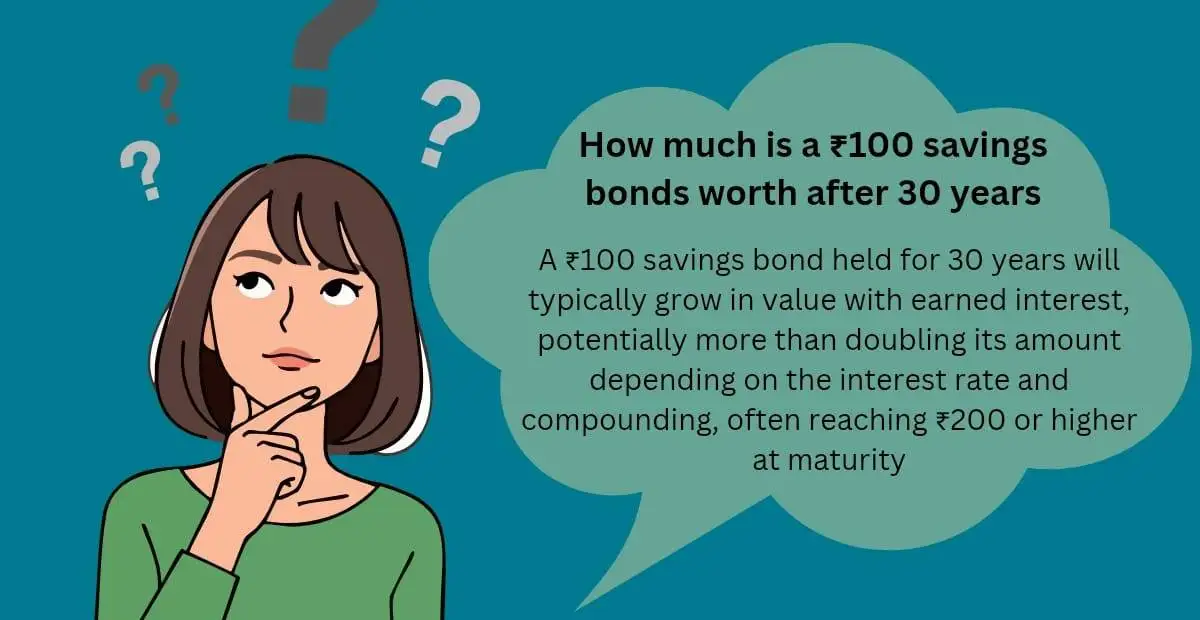
How much is a $100 Saving Bond Worth After 30 Years?
The question of how much a $100 savings bond is worth after 30 years dives into the fascinating world of compound interest. At its core, a savings bond primarily serves as a straightforward investment that matures over time. With Series I Bonds, for example, your investment not only earns interest but also adjusts with inflation, ensuring that your money retains its purchasing power. After three decades, a $100 bond could yield up to double its initial value, depending on interest rates and inflation trends during that period.
Maturity Period for Savings Bonds
The maturity period for savings bonds is a critical aspect that often shapes investor decisions. Typically ranging from 10 to 30 years, this timeline isn’t merely a waiting game — it’s a strategic choice. During this period, bonds accrue interest, growing your investment quietly while you focus on other financial goals. If you’re considering purchasing a bond, it’s essential to think long-term; the longer you allow your investment to mature, the greater the potential payoff when it finally reaches its full value
Accrued Interest on Savings Bonds
When it comes to savings bonds, understanding accrued interest can feel like deciphering a secret code. Simply put, accrued interest is the interest that builds up on your bond over time but hasn’t yet been paid out.
This means every year your bond sits untouched, it silently grows in value, allowing your investment to blossom without you lifting a finger. For many, this is a fascinating aspect of bonds that can lead to surprising earnings by the time you decide to cash out.
Face Value vs. Redemption Value
When considering bonds, the distinction between face value and redemption value often goes overlooked but is crucial for investors. Face value, or par value, is the amount set by the issuer that investors receive upon maturity, typically $1,000 for corporate and government bonds.
However, the redemption value might differ based on market conditions and the bond’s terms. Investors can find themselves navigating a landscape where the original promise may not reflect the actual market fluctuations, creating potential windfalls or losses.
Real Examples: Historical & Current Redemption Values for $100 Savings Bonds After 30 Years
$100 EE bond growth chart
Understanding the growth potential of a $100 EE bond can unlock new perspectives on saving for the future. Issued by the U.S. Department of the Treasury, these bonds grow in value over a period of 30 years, with interest compounded semiannually.
One captivating feature is that they are guaranteed to double in value after 20 years, meaning your initial $100 investment could translate into $200 — a solid choice for conservative savers looking for a stable return.
Real Examples of Matured Savings Bonds
One of the most compelling examples of matured savings bonds can be found in the stories of families who have leveraged them as stepping stones for significant life events. For instance, a couple in Ohio cashed in their bonds to fund their child’s college education. This wasn’t just a financial decision; it symbolized years of diligent saving and planning. By strategically investing in bonds early, they created a safety net that allowed them to cover tuition without incurring debt.
Treasury Direct Calculator Example
The Treasury Direct Calculator is a powerful tool for those looking to invest in U.S. government bonds. Imagine you’re considering a 10-year Treasury bond with a fixed rate of 3%. Utilizing the calculator, you can input the bond’s face value and watch as it unveils the potential interest earnings over its lifetime. This interactive aspect helps demystify the often-confusing process of bond investment by providing real-time estimates and outcomes.
How Much Does a $100 Saving Bond Pay after 30 years?
A $100 savings bond can transform over 30 years, offering a fascinating glimpse into the world of fixed-income investments. Initially purchased for $50, these bonds accumulate interest that compounds semi-annually, ensuring that your investment grows steadily. By the time the bond matures, it typically pays out its full face value, often exceeding $100, depending on the interest rate set at the time of purchase. This growth isn’t just about the end dollar amount; it paints a picture of patient investing and long-term financial planning.
Cashing In: How and When to Redeem Your Savings Bond for Maximum Value
Redeeming Matured US Savings Bonds
Redeeming matured US Savings Bonds can feel like unearthing a hidden treasure. Many people don’t realize that these bonds accrue interest for up to 30 years, and once they reach maturity, they can be cashed in for their full value. The bond redemption process is straightforward, but it’s essential to check the current rates to understand how much you’ve gained over the years. A quick online visit to the TreasuryDirect website can help you find this information, allowing you to approach the cash-in process with informed confidence.
When to Cash out a Saving Bond
Deciding when to cash out a savings bond can be a nuanced decision influenced by personal financial goals and market conditions. One compelling reason to consider cashing out early is if you need funds for an unexpected expense. While savings bonds accrue interest over time, if a financial emergency arises, accessing those funds can provide immediate relief.
Additionally, if you’re looking to make a significant purchase, such as a home or education, cashing out at the right time could yield a better return than letting the bond continue to accumulate interest.
Where to Redeem US Treasury Bonds
When it comes to redeeming US Treasury bonds, the process can feel a bit overwhelming, but it doesn’t have to be. If you hold paper bonds, the most straightforward route is to visit your local bank or credit union. Many financial institutions can cash these bonds right on the spot, provided you bring valid identification and, of course, the bonds themselves. It’s a misconception that you need to send them to the Treasury; local banks can often handle the transaction, giving you immediate access to your funds.
Conclusion: Why Knowing Your Bond’s Worth Matters—Make Smart Financial Decisions Today!
US Treasury securities, including savings bonds, offer a unique avenue for maximizing your investment strategy. Unlike riskier assets, these bonds provide a steady, guaranteed return, making them a cornerstone for any safe investment portfolio.
For those looking to optimize their financial plans, tapping into bonds can be a strategic way to balance risk. Consider purchasing Series I savings bonds. They provide protection against inflation, as their interest rate adjusts semiannually based on inflation rates, ensuring your investment keeps pace with rising costs.
3 thoughts on “How Much Is a $100 Savings Bonds Worth After 30 Years? Uncover the Real Value”